
The alarm clock sounds at 5:30 AM, not because you have to be at work early, but because you’ve convinced yourself that "successful people" utilize every waking second for optimization. You reach for your phone, and before your feet even hit the floor, you are inundated with images of peers who seem to be ascending a ladder that has no top. They are hitting milestones you haven't even written down yet: the perfect home, the skyrocketing career, the seemingly effortless fitness transformation. In this moment, the pursuit of growth, something we are told is the ultimate virtue, starts to feel like a crushing weight. Instead of feeling inspired, you feel behind. Instead of feeling capable, you feel like a failure.
Our current cultural landscape is heavily anchored in achievement-based metrics, where our worth is often tied to a series of benchmarks that define what a successful life should look like. We are conditioned from a young age to believe that if we aren’t constantly evolving, we are stagnating. But for many, this constant drive for "better" has transformed into a relentless inner critic that views any deviation from a perfect plan as a total collapse of character. When the very act of trying to improve becomes a source of despair, we have entered a space where growth no longer feels like progress; it feels like an impossible standard we can never meet.
The Architecture of the "Failure" Feeling
What does it actually mean to feel like a failure? It is rarely about one single event. Instead, it is a pervasive sense of self-doubt, hopelessness, and shame that colors every aspect of our existence. For some, it manifests as a desire to isolate, a lack of trust in one’s own abilities, or a paralyzing fear of making any move at all because the cost of another mistake feels too high.
This feeling is often fueled by "comparison thinking." We look at the curated highlights of others’ lives on social media and use them as a yardstick for our own internal struggles. Statistics suggest that a vast majority of people, roughly 90% of women and 60% of men, engage in this habit of comparing themselves to others online, despite knowing that they are seeing an incomplete picture. This creates a "all-or-nothing" mindset where the only two options are total victory or complete defeat, leaving no room for the messy, non-linear reality of human development.
The Psychological Roots of Achievement Anxiety
To understand why the pressure to be better feels so heavy, we have to look at where these patterns began. For many, the fear of failure is not a modern invention but a seed planted in childhood. We often internalize the idea that our lovability is conditional upon our accomplishments. If we grew up in environments where failure was met with extreme disappointment or frustration from caregivers, we may have learned that "not being enough" is a threat to our safety and security.
In school, this is reinforced by a system that judges children based on grades and assignments, creating a direct line between performance and identity. We are taught that hard-working students don't fail, which implies that if you do struggle, the problem is not the task, but you. As adults, this translates into a mindset where we view failure as a moral deficiency rather than a natural part of the learning process.
When Growth Leads to "Rock Bottom"
There is a specific kind of exhaustion that comes from trying to "hustle" your way into healing. We try to fix our anxiety with more productivity, or we try to cure our burnout by setting even more ambitious goals. This cycle often leads to a "spiritual rock bottom," a point where our internal reserves are completely depleted, and we find ourselves disconnected from our faith, our purpose, and our community.
It is in these moments that we must realize that hope is not just a feeling we wait for; it is a practice we choose. When you define yourself as broken because of the circumstances you’ve endured or the choices you’ve made, it can feel like there is no escape. However, even when you are at your lowest point, looking up is the first step toward a different narrative. At Rock Bottom Hope, the belief is simple: no matter where you are or how far you feel you’ve fallen, there is a path back to a version of yourself that is defined by more than your mistakes.
Shifting the Narrative: From Goals to Values
One of the most effective ways to alleviate the pressure of "betterment" is to shift our focus from rigid goals to enduring values. Goals are often external markers, like a specific job title or a number on a scale, and when we don't hit them, we feel like we’ve failed. Values, however, are about the kind of person we want to be during the process.
For example, if your goal was to get into a specific program and you weren't accepted, a goal-oriented mindset says you failed. But a value-oriented mindset allows you to see that you honored your values of dedication and perseverance by applying. This reframing helps us focus on the journey rather than just the outcome, allowing us to recognize that even if things didn't go as planned, the character we built along the way still matters.
Practical Tools for the Journey Up
To stop the spiral of feeling like a failure, we need tangible tools to challenge the "bully" in our brains.
The Evidence Log: When we feel low, we tend to forget our successes. Keeping a regular log of positive feedback, small wins, and moments where we overcame obstacles provides concrete proof to counter negative self-perception.
Challenging the "ANTs": Automatic Negative Thoughts (ANTs) often trick us into thinking our feelings are facts. By asking ourselves if we are overgeneralizing or assuming the worst, we can break the cycle of self-sabotage.
Self-Compassion as Strategy: We are often far meaner to ourselves than we would ever be to a friend. Practicing self-compassion, telling yourself that you are doing your best and that your mistakes do not define your worth, is essential for building the resilience needed to try again.
Redefining the Word "Fail": Instead of using a word that carries so much shame, try using terms like "setback," "unwanted outcome," or "learning opportunity". This lowers the emotional stakes and makes the situation feel more approachable.
True growth requires a community of support. Whether it's through a trusted friend, a professional coach, or a specialized organization, having an outside perspective is vital. Rock Bottom Hope provides a connection to a community of coaches and life changers who understand that the journey of recovery and mental growth isn't linear. It’s about learning to climb out of those low points stronger than you were before, armed with the knowledge that you are not alone.
The Power of "Looking Up"
When the pressure to be better starts to feel like failure, it is often because we have lost sight of our inherent value. We have become so focused on the climb that we have forgotten why we started walking in the first place. Reclaiming your mental space in a burnout culture requires radical self-love and the willingness to see challenges not as barriers, but as opportunities for deeper growth.
If you find yourself in a place where the light feels far away, remember that hope can find you anywhere. It isn't found in a perfect to-do list or a flawless career trajectory; it’s found in the quiet moments of choosing to be kind to yourself when you've made a mistake. It's found in the realization that your worth is not a performance. At Rock Bottom Hope, we remind you that all you have to do is look up, and you will see a community ready to help you navigate the storm and find your way back to a life lived with purpose and clarity.
Frequently Asked Questions (FAQ)
Why do I feel like a failure even when I am accomplishing my goals?
This often stems from "comparison thinking" or unrealistic expectations. If your self-worth is tied solely to the next achievement, you will never feel like you've done enough. It can also be a sign of deeper unresolved emotional experiences or mental health concerns like burnout or anxiety.
How can I stop the spiral of negative self-talk?
Start by identifying your "Automatic Negative Thoughts" (ANTs). Challenge these thoughts by asking for evidence: Are these facts or just feelings? Using an "evidence log" to track your past successes can help provide a counter-narrative to the inner critic.
What is the difference between a goal and a value?
A goal is a specific, outcome-based destination (e.g., "I want to earn X amount of money"). A value is a guiding principle for how you live (e.g., "I want to be generous and hard-working"). While goals can be failed, values can be practiced every day, regardless of the outcome.
When is it time to seek professional help?
If feelings of failure are chronic, lead to isolation, or impact your physical health (like causing sleep issues or chronic pain), it may be time to speak with a therapist or coach. They can help you heal deeper wounds and provide tools for lasting growth.
How do I start over after a major setback?
Begin by practicing self-compassion and recognizing that failure is a universal human experience. Use the "SMART" framework to set small, achievable goals, and reach out to a supportive network for encouragement and perspective.
Conclusion: Embracing the Non-Linear Path
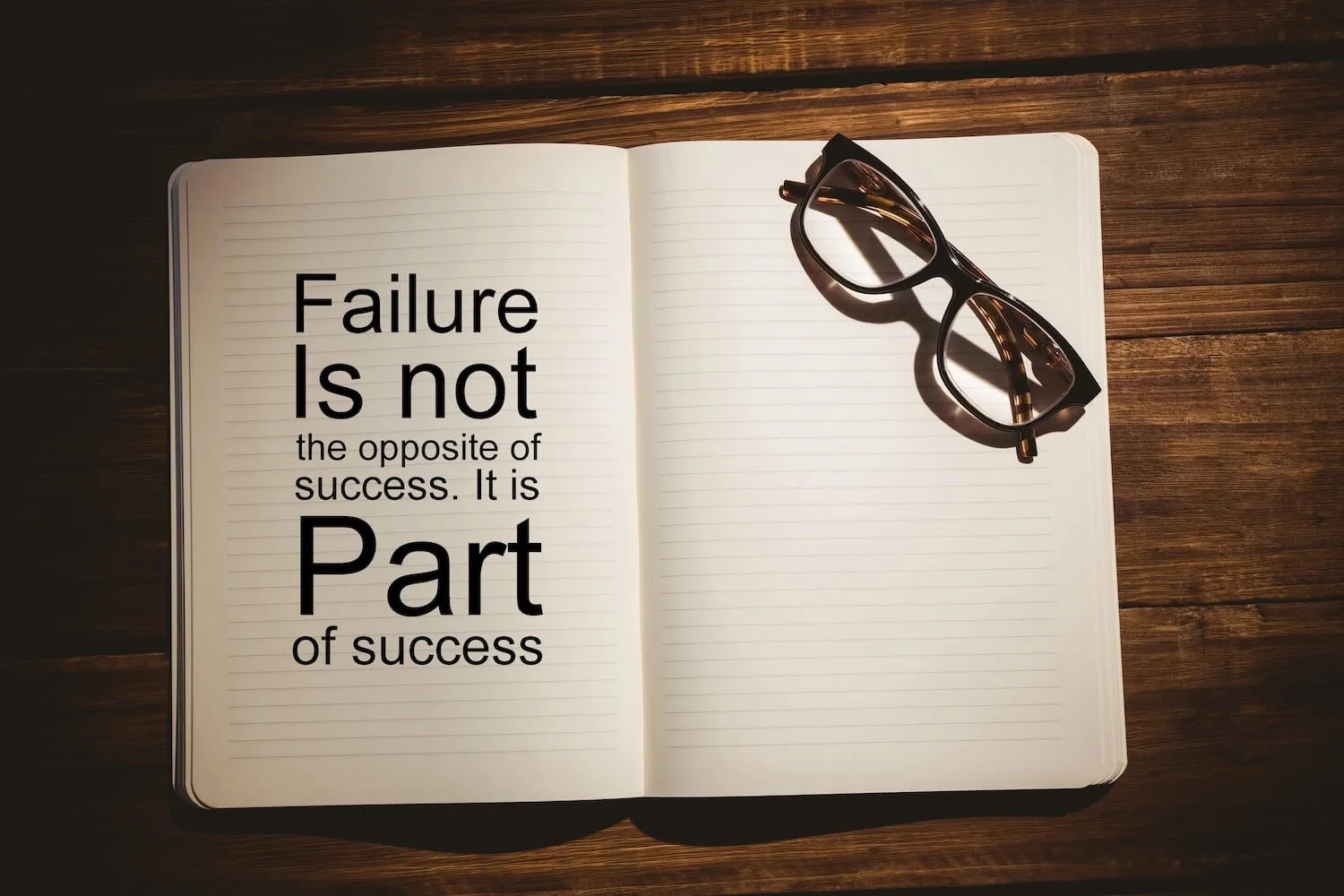
The journey of self-improvement is not a straight line up a mountain; it is a winding path through valleys and over peaks. When we stop viewing the valleys as "failures" and start seeing them as necessary parts of the terrain, the pressure begins to lift. You are not your mistakes, you are not your setbacks, and you are certainly not a failure. You are a person in progress, and that progress, no matter how slow it feels, is worth celebrating.